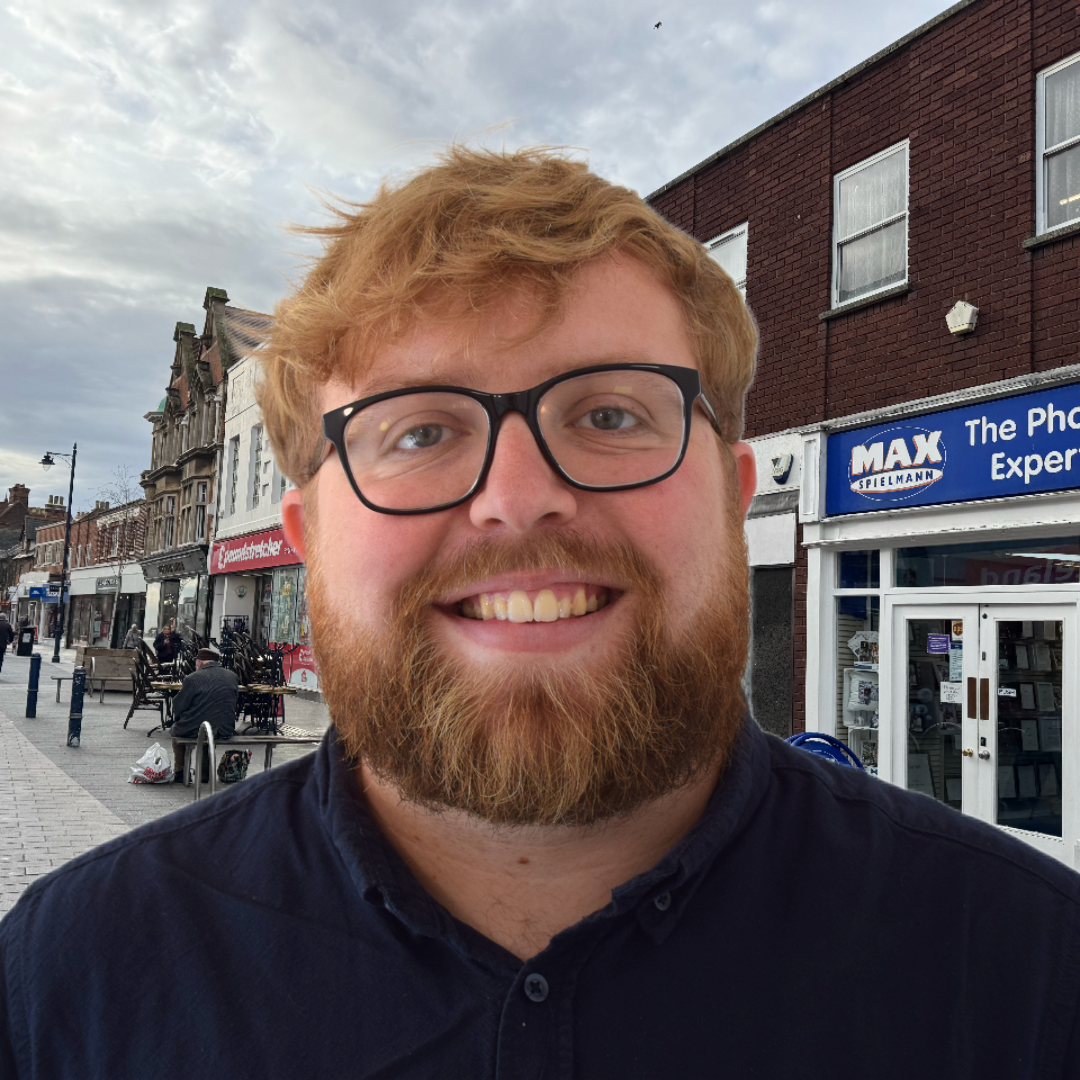

Local good news-journalist and PR-manager Luke Smout wears a red shirt and has a red beard that almost matches the enthusiasm with which he talks about Felixstowe. During the conversation, he often glances upwards for a moment, searching for the right words. But once he starts talking about his work, any hesitation fades. This is his town. And for years now, he has been trying to keep it visible, in his own, accessible way.
Smout grew up in Felixstowe. It’s the place where he spent his childhood, where he has friends, memories, and a strong sense of home. He no longer lives there, though. “I just couldn’t afford it,” he says matter-of-factly. He moved to Ipswich, about twenty minutes away. “I do love where I live,” he adds quickly, careful not to dismiss his new home.
Ten years ago, Smout bought the local news website Felixstowe News. He was still at school at the time, looking for a way to gain experience in marketing and communications. Five years later, during the Covid pandemic, he also took over Felixstowe Docker, a site focused on news about the port. What started as a learning project slowly grew into two important platforms for the town and its harbour.
Focus on community
Smout works full-time in PR and marketing; he runs the websites alongside that. Still, they don’t feel like a side project to him. Felixstowe News focuses on the community: events, local initiatives, sports clubs, volunteer groups. Felixstowe Docker covers developments at the port, which is economically central to the town. “They work quite nicely together,” he says. “The town and the port are two different worlds, but they belong together.”
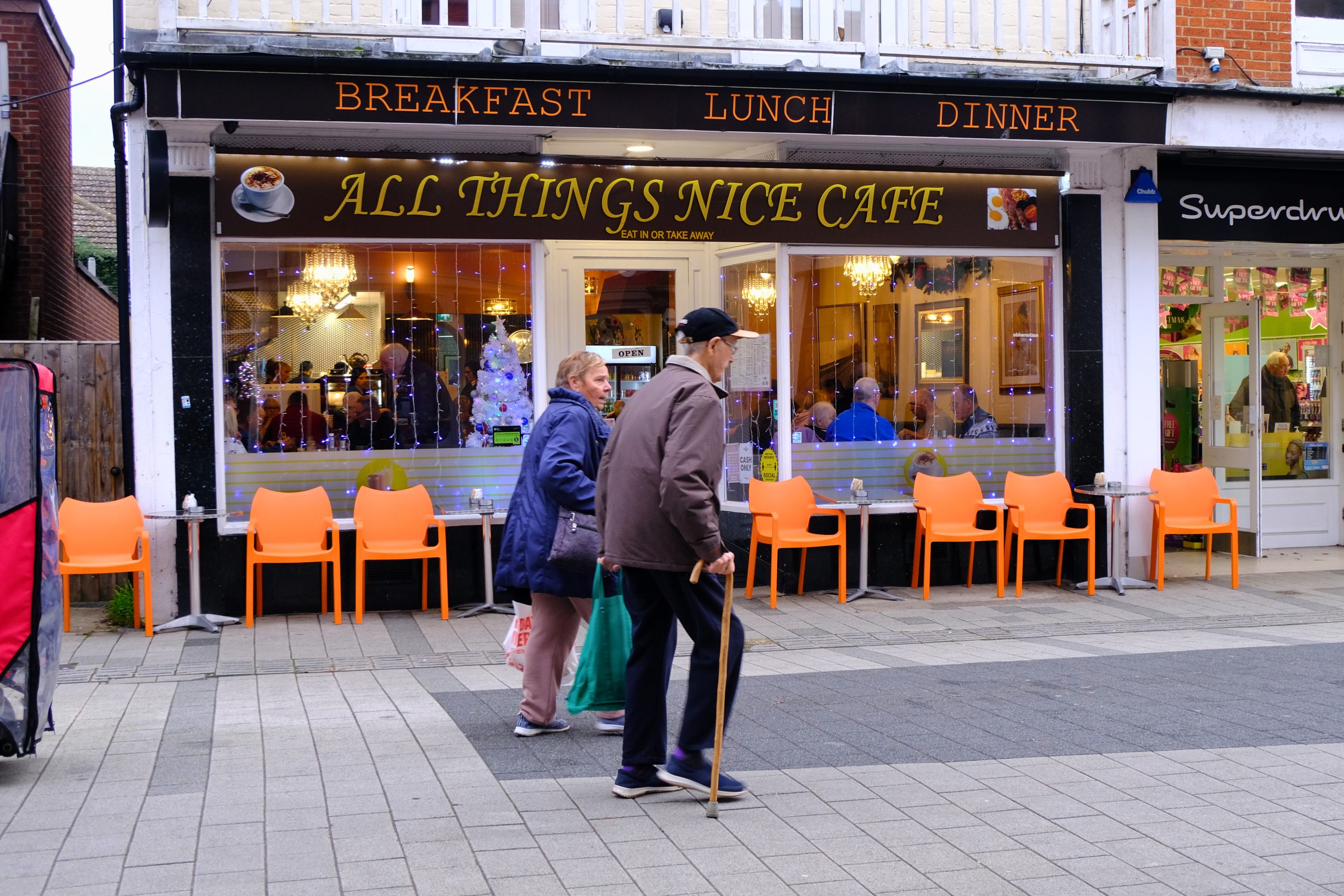
The strength of his work lies in proximity. With around twelve thousand followers on Facebook, Felixstowe News has become a familiar platform for many residents. He scrolls through the page. “People message me saying, ‘Can you cover our event?’ or ‘We’ve got a story,’” he says. He smiles.
“That’s what I love about it. It brings the community together around something positive.”
Smout deliberately focuses on good news. Not because there are no problems, he stresses, but because those already receive enough attention elsewhere. “Felixstowe often gets missed in regional media,” he says. “Ipswich and the bigger towns get the spotlight.” When he started, there were hardly any local outlets left. The traditional newspaper had closed its local office, and coverage had become centralised across the region. “I thought it was really important that Felixstowe didn’t become invisible.”
And it hasn’t. His pages are filled with announcements of village fairs, sports tournaments, beach clean-ups, and small business openings. Events that don’t attract national cameras, but matter deeply to the people who live there.
New Facebook groups
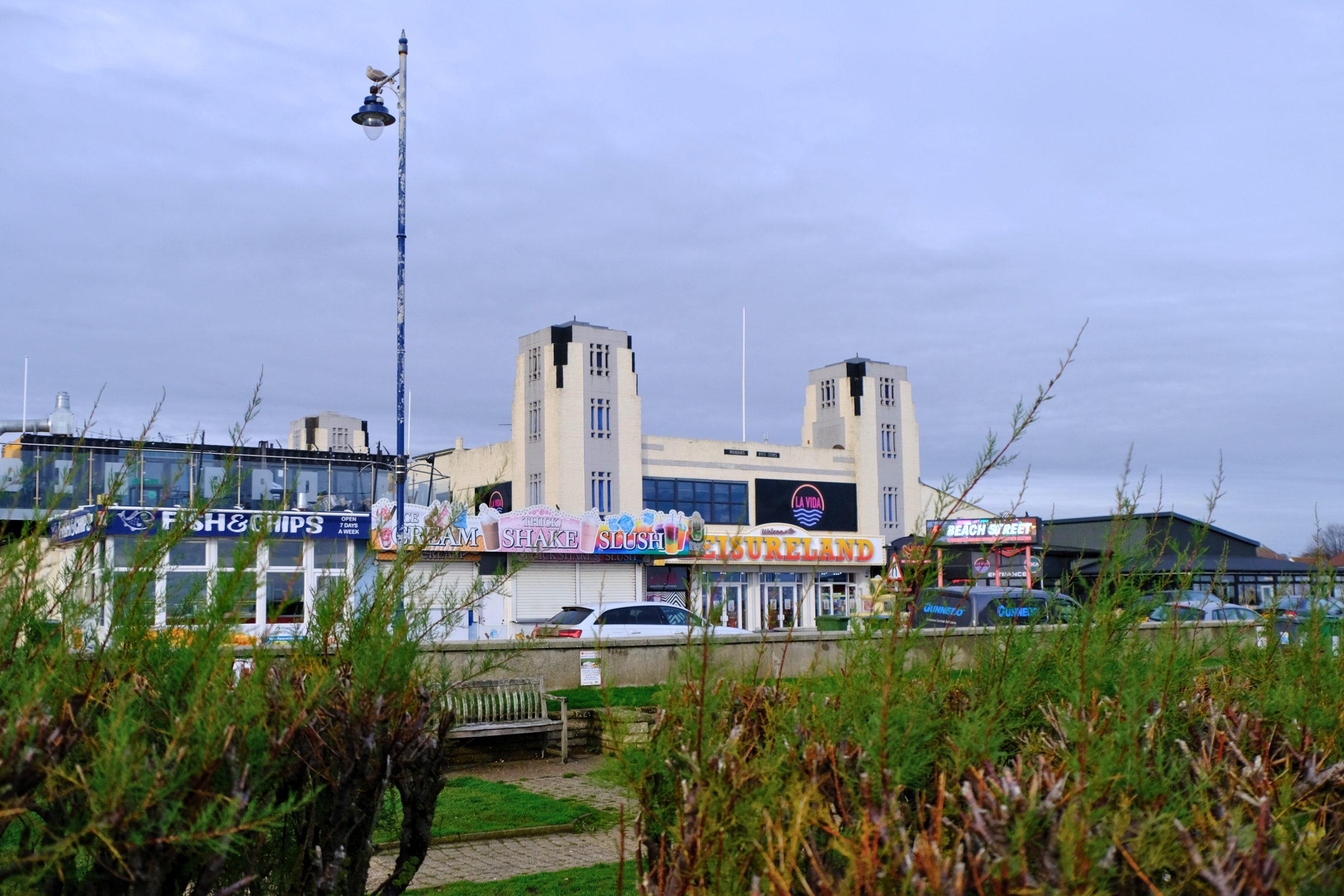
Over the past decade, Smout has watched the town change significantly. Community life has become more active and more visible. “Every couple of weeks there seems to be another Facebook group popping up,” he says. At the same time, the physical landscape has shifted too: empty spaces replaced by cafés, small shops and new initiatives along the seafront. He mentions Beach Street, a collection of shipping containers housing independent restaurants, built where there was once only concrete. “Places like that show what’s possible.”
Growth, however, comes with a downside. Housing has become more expensive, especially for younger people. Smout is a case in point. “A lot of people want to stay, but they just can’t.” The contrast with the port is stark. Those who work there often have stable incomes; for others, that prosperity feels distant and abstract.
Still, Smout speaks without bitterness. He talks about Felixstowe with pride, sometimes almost fiercely. “People only think about the port,” he says. “But Felixstowe is also a seaside town. A community. A place with history, long before the containers arrived.” That these stories are often overshadowed by images of cranes and lorries frustrates him. “But how would people know,” he adds, “if no one tells them?”
That, perhaps, is exactly what Smout has been doing for the past ten years: telling the stories that might otherwise remain unseen. Not through big analyses or sharp criticism, but by consistently paying attention to everyday life — to people organising something, building something, trying something. “Felixstowe works because of its people,” he says. And it’s that belief that drives his work, post after post.
