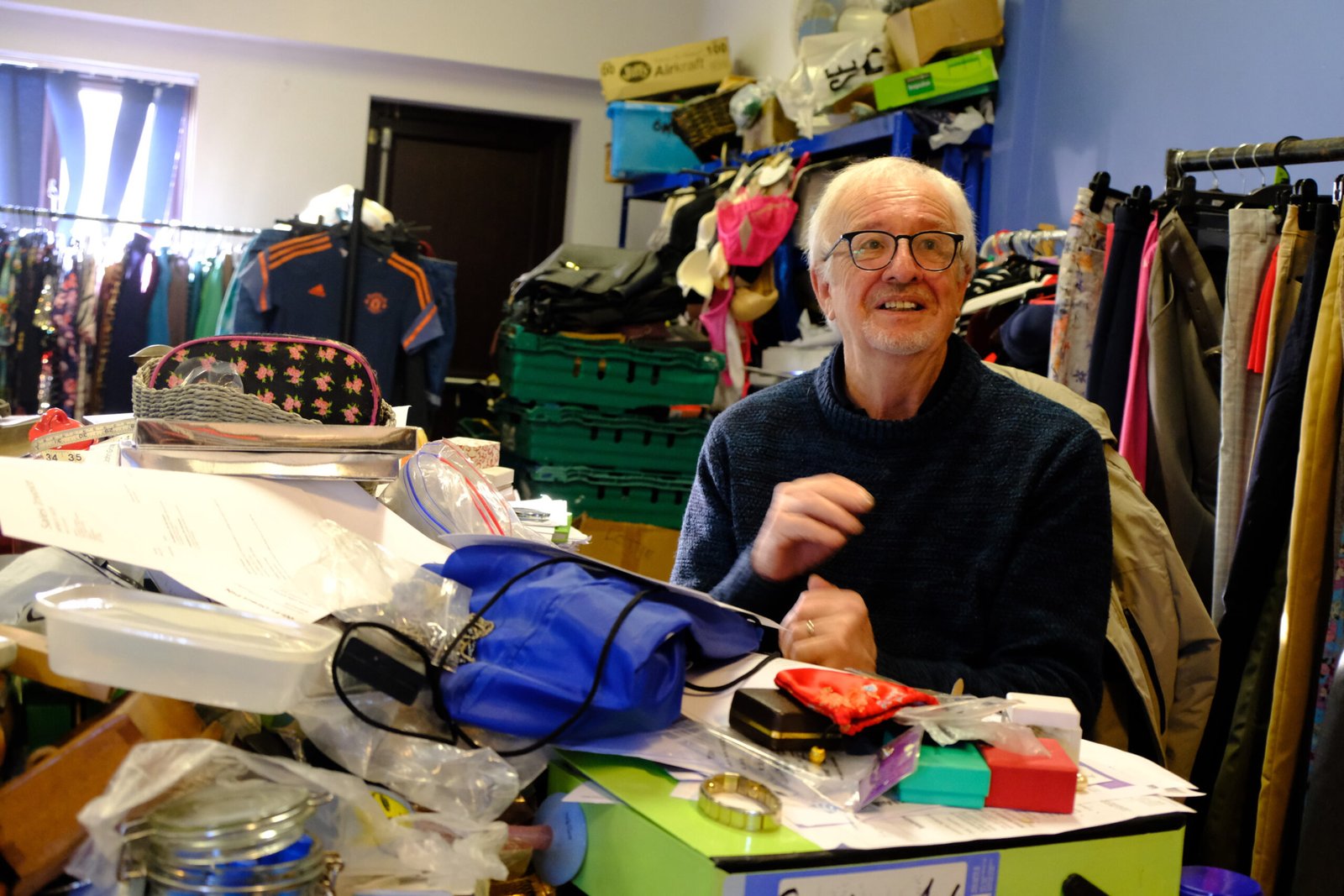

Inside the Walton Shop on Felixstowe’s High Street, he gestures towards racks filled with coats, dresses and children’s shoes. Everything costs two pounds. Always two pounds. Since the year 2000, when he founded Basic Life Charity. “Paperback books are forty pence, hardbacks sixty. Clothes are two pounds per item. We’ve never put the prices up.” He laughs. “Zero inflation. The government could learn from that.”
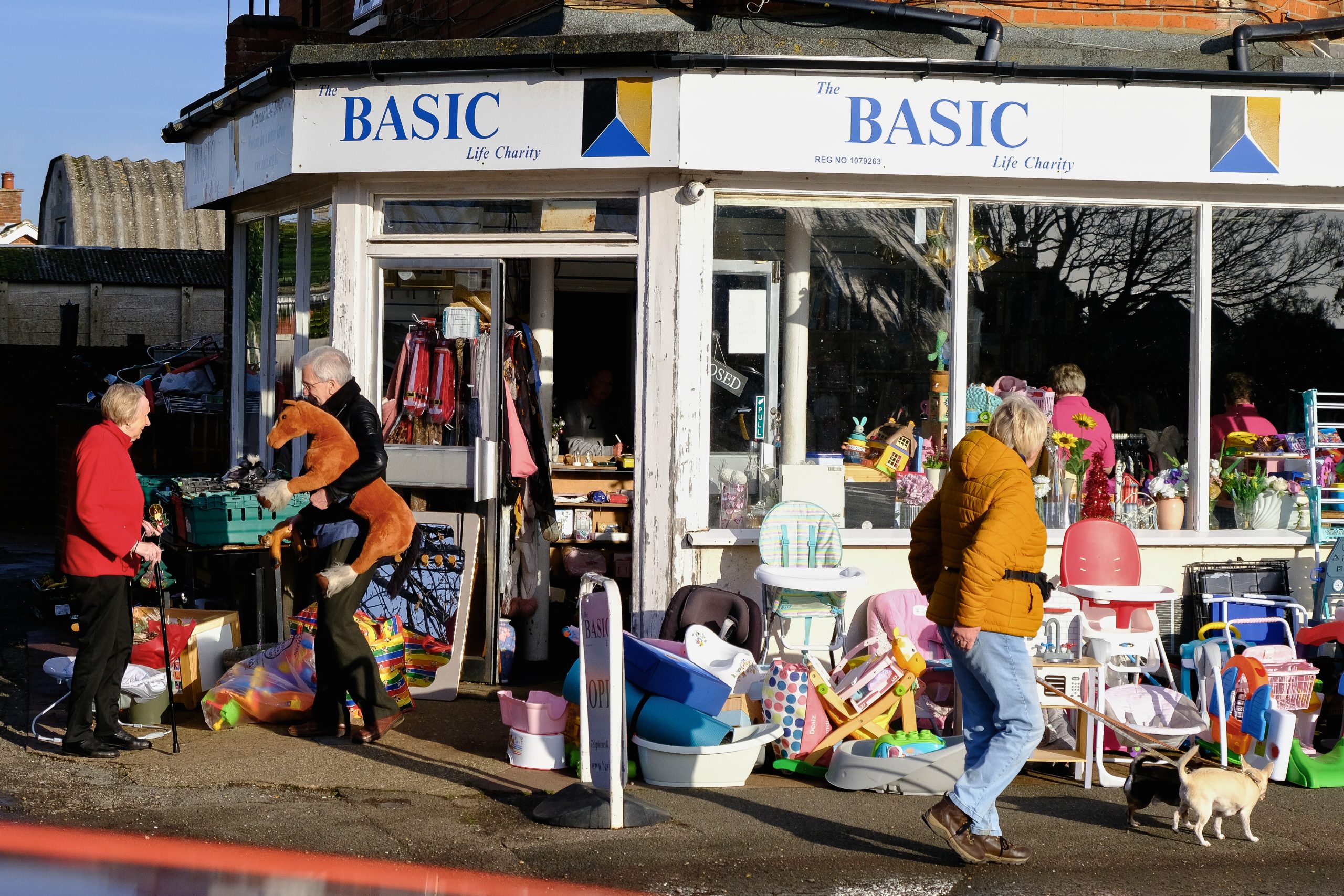
Denny is the founder and public face of Basic Life, a charity that has become indispensable in Felixstowe and the surrounding area. The organisation runs two depots and three charity shops – two in Felixstowe and one in nearby Woodbridge – and was the driving force behind the so-called pop-up food shops: low-threshold food distributions where people can fill a bag of groceries for two pounds.
Live show
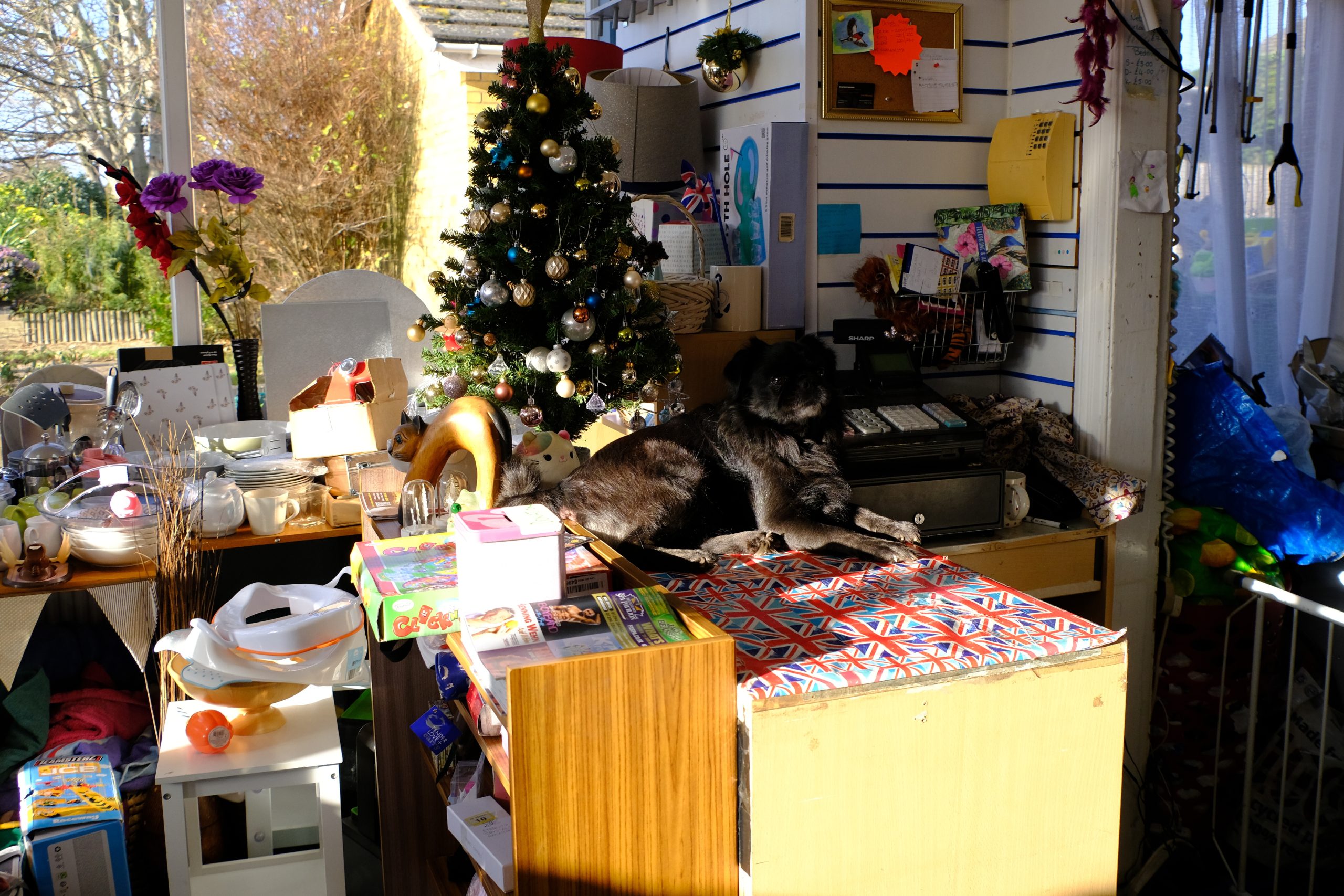
We meet Denny on a busy day. First at his depot, where he hosts the online Whatnot live show, where he and his daughter Sarah sell second-hand clothes, jewellery and shoes to viewers from across England and far beyond. Then we drive to the Walton shop, in a part of town where poverty is more visible than along the seafront.
Twenty years ago, his life looked completely different. Denny worked as managing director at a shipping company and had a lot to do with the port of Felixstowe. “I drove a BMW and lived in a thirteen-bedroom house,” he says almost casually. The shipping company suffered due to Chinese influence in the port, and Denny had a falling out with his business partner, so he quit and started working full-time for Basic Life. Now he has a small scratched car and a three-bedroom house. “But I’m so much happier.”
The idea behind Basic Life was simple. People donated goods, he sold them cheaply, and used the proceeds to help people locally. “Everything we earn stays local. People should be able to see, touch and feel what their money is doing.” That visibility proved crucial.
“Everyone in Felixstowe knows someone we’ve helped. A wheelchair, a few hundred pounds to pay an electricity bill, a short respite break for carers.”
Since 2013, Denny has focused entirely on the charity. Over the years, Basic Life grew rapidly. Supermarkets began donating surplus food that would otherwise be thrown away. That’s how the pop-up food shops were born. No forms, no bank statements, no referrals from professionals. “You pay two pounds and you choose what you need,” Denny says. “That’s important. Psychologically, it works much better than a food parcel.”
We’ve got to be bigger
There is criticism too. That people who don’t really need it benefit from the scheme. Denny shrugs. “If someone takes a bit of beans and bread that they might have been able to afford themselves, we’ve got to be bigger than that.” He leans forward slightly. “We don’t want to put extra barriers in the way. People who are genuinely struggling often find paperwork incredibly hard.”
Alongside food support, Basic Life also offers direct financial help: up to five hundred pounds per individual or family. Sometimes Denny can transfer the money the very same day. “I get personal emails. Some are scams – I can spot those now. But the genuine ones… people writing that they’re in tears because they can finally pay their bills.” He pauses. “I feel incredibly privileged to be able to do that.”
