
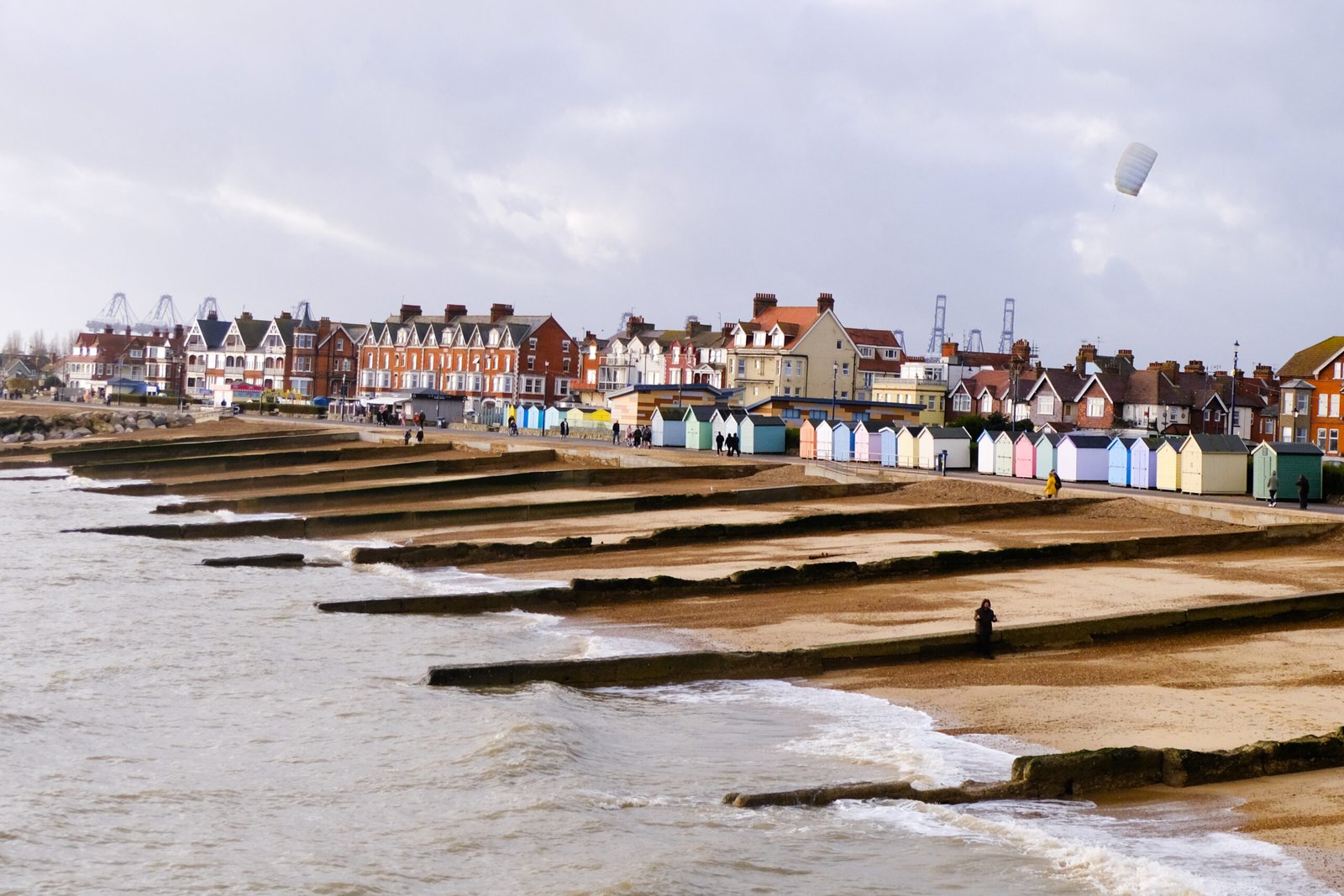

Felixstowe is the UK’s largest container port — and at the same time a town where volunteers form the safety net beneath the global economy
To the untrained ear, the rumblings on the seafront sound like an approaching storm, but for the residents of Felixstowe, it’s everyday background noise. The sound comes from the port, which has been the largest container port in the United Kingdom since the 1980s. Within earshot of a global player in international trade, thousands of residents have to scrape together their pounds to make ends meet.
Where container ships load and unload billions worth of goods every day, some families have to choose between heating and food. Felixstowe has over 24,000 residents; about half of the working population earns their income directly or indirectly from the port. Yet that prosperity is far from reaching everyone. In the town, 13.4 per cent of children live in income poverty, and 9.4 per cent of the working population also suffers from structural deprivation.
What began as a modest port on the Suffolk coast has grown into a hub for global trade. Millions of containers pass through the docks every year, approximately half of all British container trade passes through Felixstowe. Ships from Asia are regulars, continuing their trip to Rotterdam, Antwerp and Hamburg after unloading. The port now covers more than 3,300 hectares, operates day and night — and can therefore be heard throughout the city.
Substantial investments
There has been substantial investment in recent years. International capital is flowing in, partly through Freeport East, a special economic zone in which Felixstowe collaborates with Harwich and surrounding logistics zones. According to figures from the region, this involves hundreds of millions of pounds of investment in infrastructure, digitisation and logistics innovation. The promise: economic growth, jobs and a stronger competitive position for the United Kingdom after Brexit. “Ports are extremely productive economic machines, but they often function as enclaves. The link with the local economy exists, but it is weaker than many people think,” says economist Neil Lee of the London School of Economics.

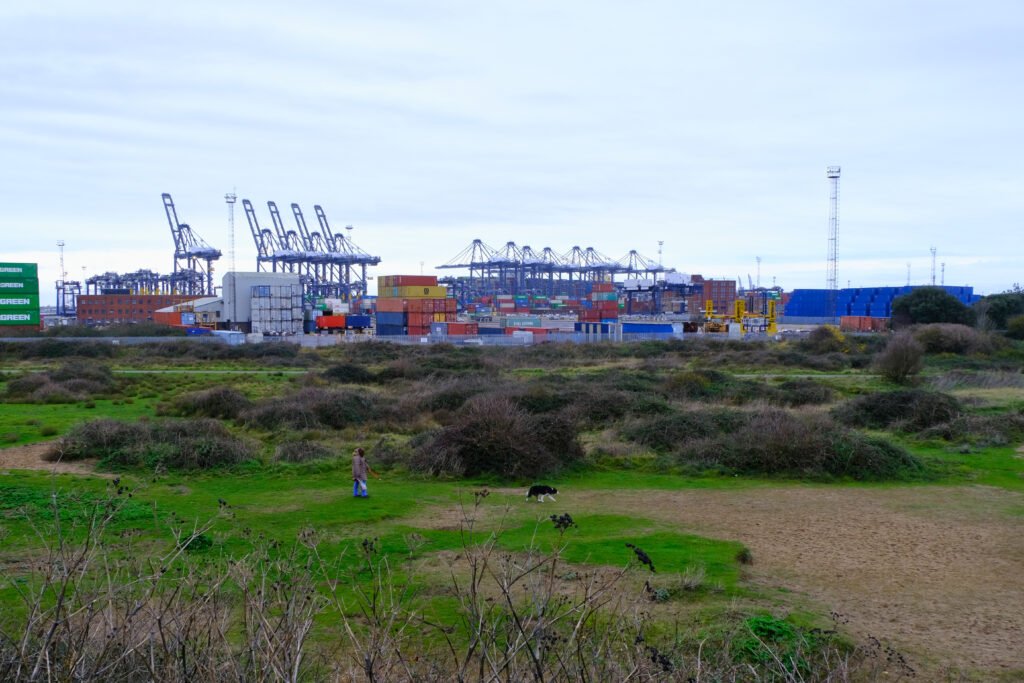
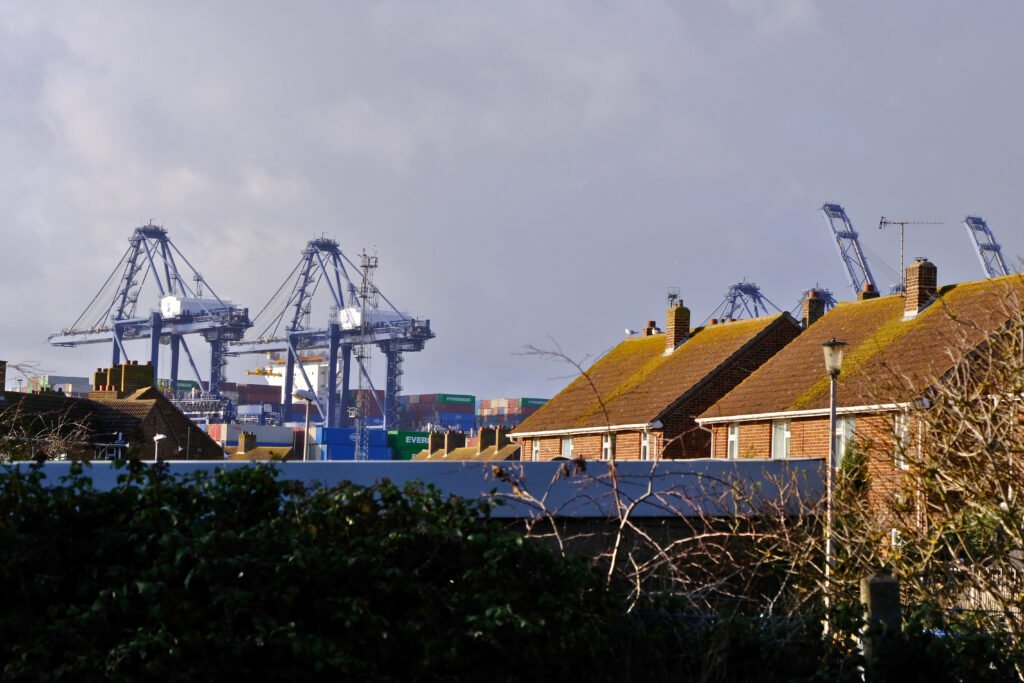
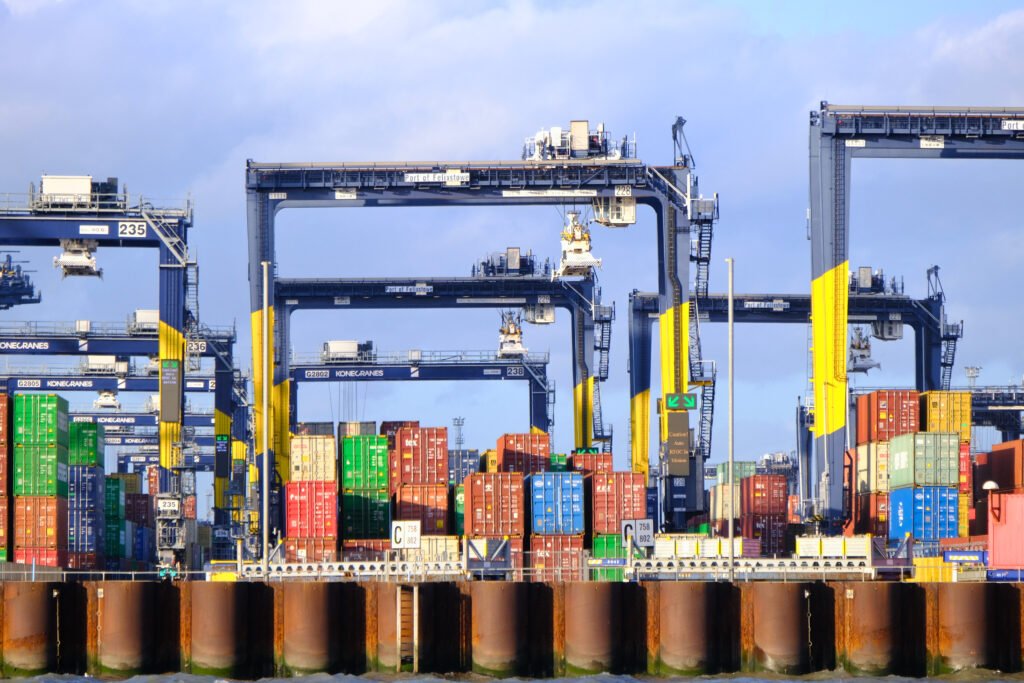
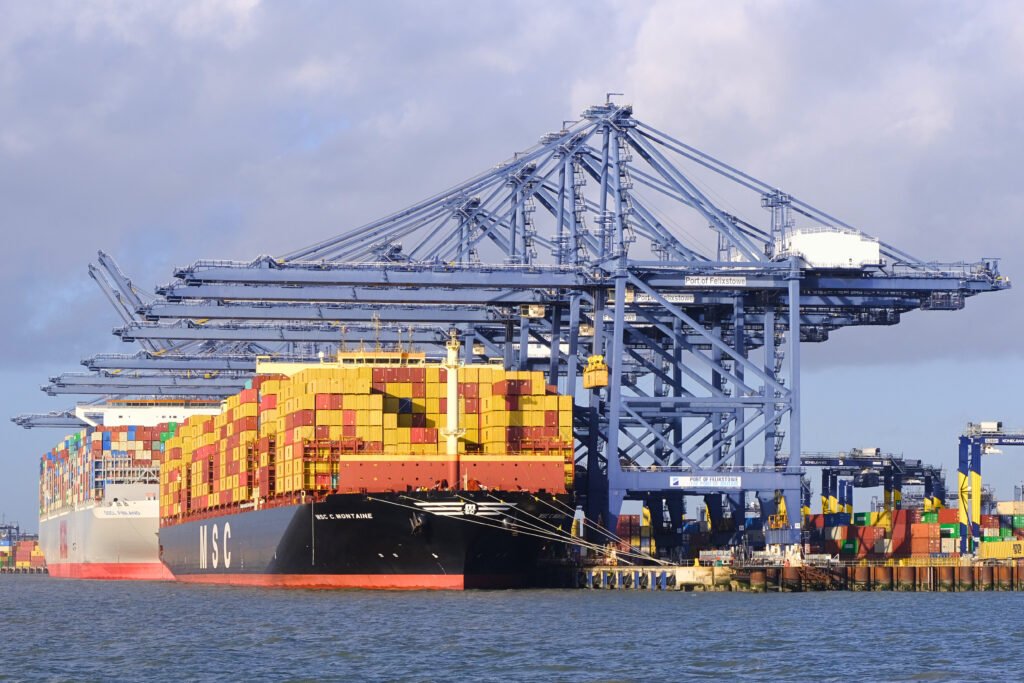
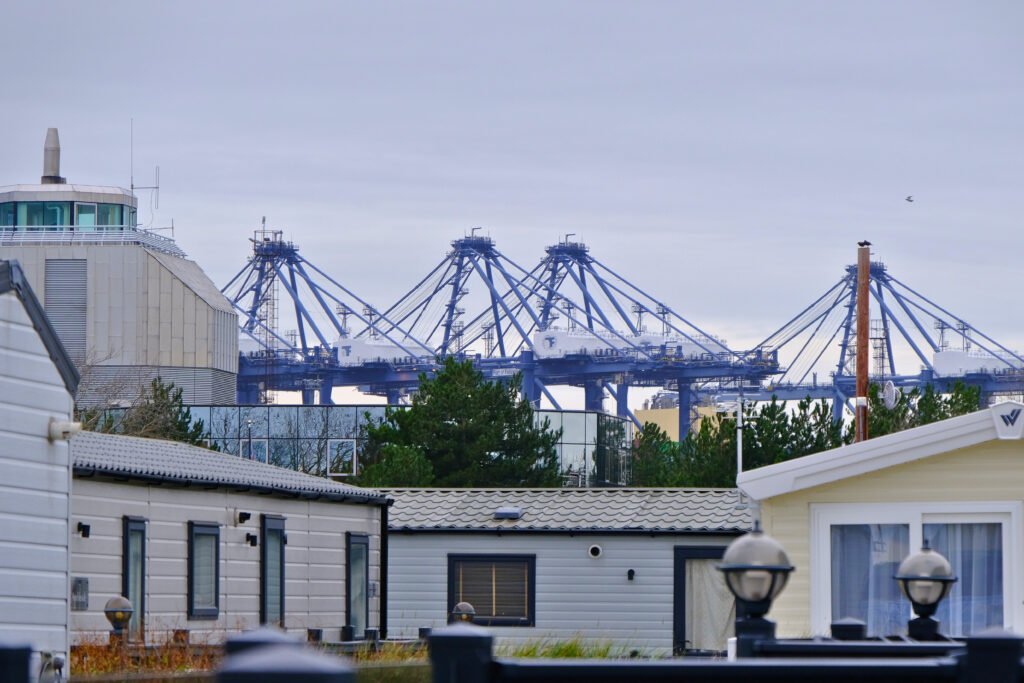
The growth is visible on the port site itself. New terminals, larger cranes, self-driving lorries and automated systems. The port is owned by Hutchison Ports, an international company headquartered in Hong Kong. This makes Felixstowe one of the few large European ports that is entirely foreign-owned. “A port can be extremely profitable, but that in itself is not enough to make a city flourish,” says Diane Coyle, economist and professor at Cambridge University. “We have become very good at optimising global trade chains, but much less good at anchoring that value locally. For example, money earned in large coffee chains on a village street disappears to owners in other countries. That the money made in the port doesn’t always stay in Felixstowe isn’t the fault of the port, but a structural problem in how we organise the economy,” says Coyle.
A global port at the kitchen table
In the shadow of the global port, other work is also being done, and sleeves being rolled up. Not for loading and unloading, but to deal with everyday problems. To bridge the gap between the port prosperity and daily poverty. Volunteer organisations and churches help residents with pop-up food banks, second-hand shops and direct emergency aid. They form an invisible but crucial layer underneath the formal economy of the port.
“People know Felixstowe as a port city, with its cranes and containers, but the real story lies in what happens behind the scenes. Our community does the real work” – local journalist Luke Smout
One of the most visible, tangible and well-known charities in the town is Graham Denny’s Basic Life Charity. Founded at the turn of the century, the charity started out as a traditional second-hand shop, but over the past twenty-five years it has grown into a chain of shops, providing a real social safety net for the local community. The town’s mayor, Corrine Franklin, emphasises that much of the support in Felixstowe comes from the bottom up. “We have hundreds of active volunteer groups here,” she says. “You don’t see that everywhere. The strength of the city lies in people taking initiative themselves.”
For those who work there, the port offers stability. The jobs are relatively well paid, in line with collective labour agreements, and offer security in a region where that can be scarce. Economically speaking, the port is undoubtedly the beating heart of the city. “These are not jobs that are accessible to everyone. This creates a clear dividing line between those who benefit and those who don’t,” explains economist Lee.
A safety net beneath the port
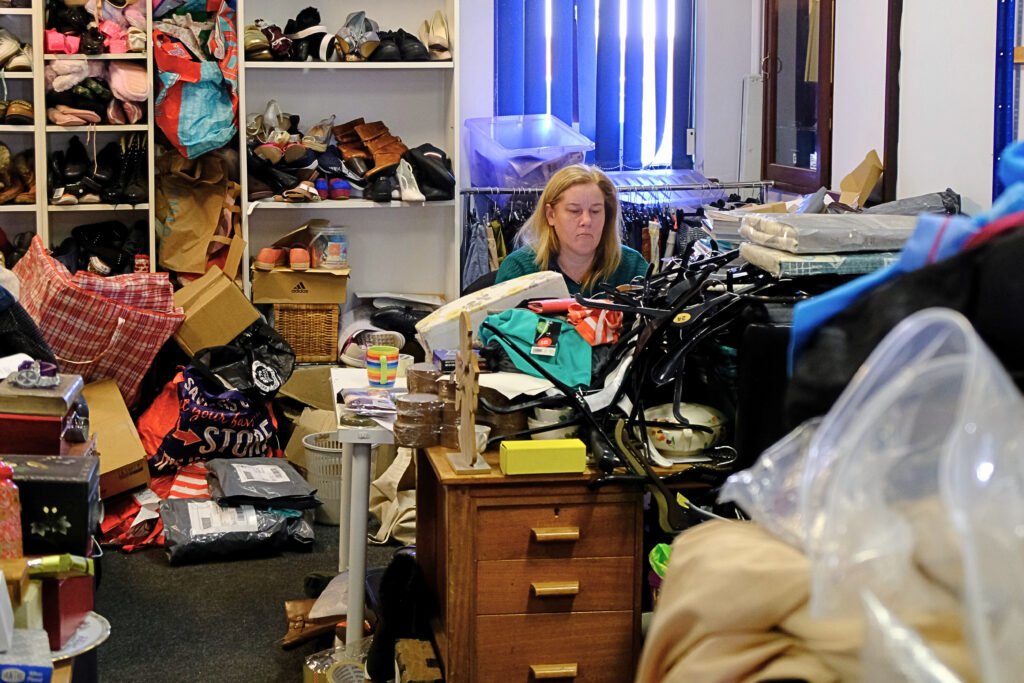
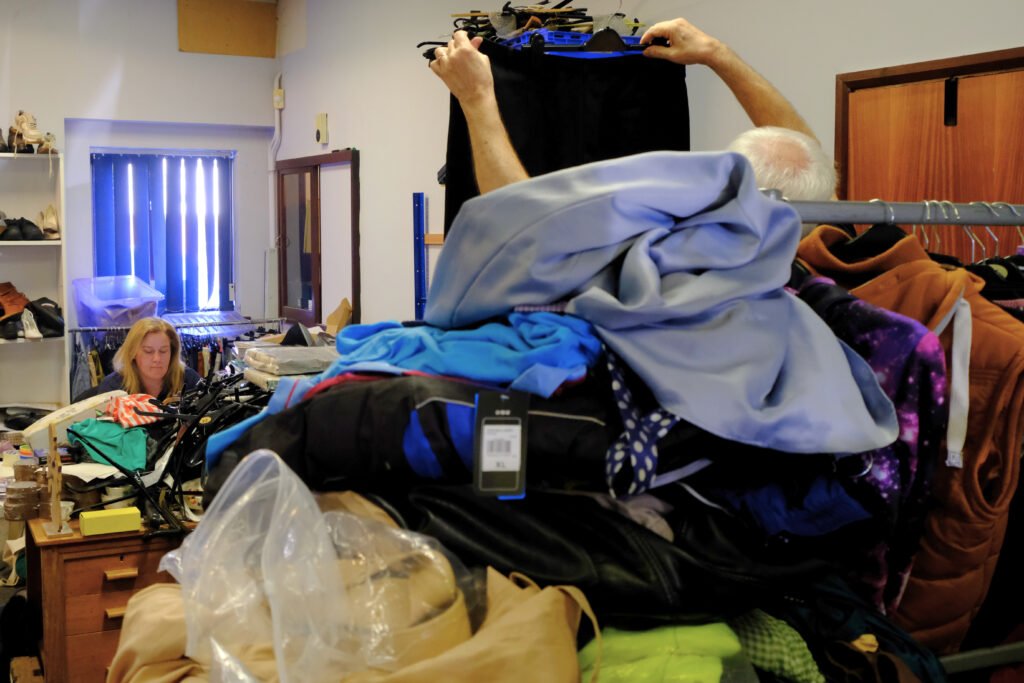
The Basic Life depot is located at a strange crossroads of worlds. On one side, the site borders the port, where containers pile up and lorries drive back and forth. On the other side is a nature reserve and, a little further along the coast, a holiday park with bungalows. In a row of former car showrooms, cheaply rented from an owner who, as Graham Denny puts it, ‘likes the work we do,’ Basic Life sorts through the stream of goods that comes in every day. Clothes, books, shoes, jewellery. More than they could ever sell in their shops.
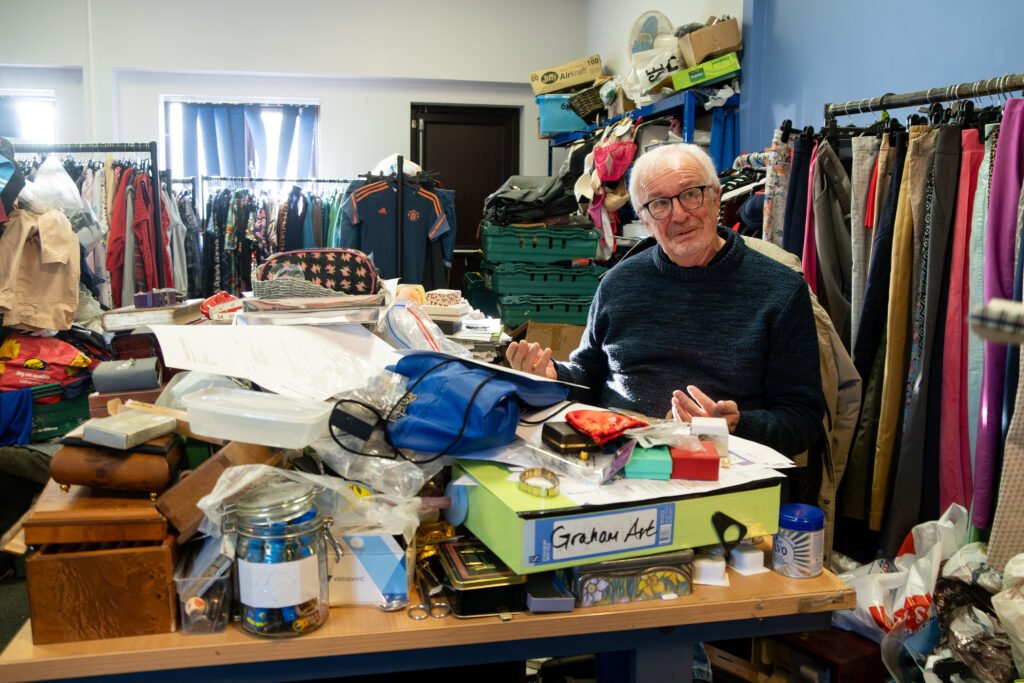
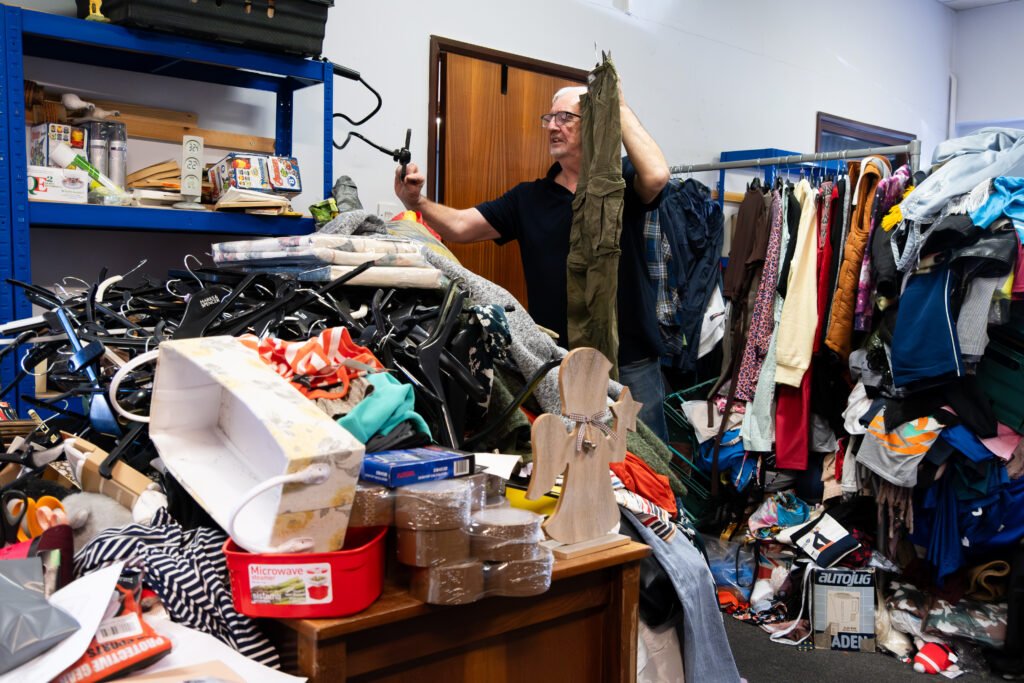
In one of the warehouses, Denny is preparing for a Whatnot livestream: an American online marketplace where sellers offer their goods to viewers around the world via live video. Everything starts at one pound. Denny apologises as he adjusts his phone and tripod. “What I’m about to do is one big show,” he says, visibly uncomfortable with the sales pitches he has to do. Still, he picks up the sixty items that will be auctioned that morning, one by one. He holds up a long brown skirt for a moment, searching for words. “My wife says this is in fashion now, but what do I know about that?” Next to him, his daughter Sarah Denny sits at a desk keeping track of the sales, keeping up the pace and noting that this one hoodie with pockets is likely to be ‘a real hit.’

A well-oiled machine
During the livestream, Denny sells the clothes as if he were at a market. He turns the items around, points out details, makes jokes. “It comes with pockets, for all your sweeties and dog treats,” he says, as the bids come flooding in. Some items go for surprisingly high prices, sometimes bought by resellers who later sell them on at a profit. Denny knows it, and it bothers him just a little. But he decides to shrug it off. The money goes to people in Felixstowe, he emphasises. “That’s all that matters.” When the livestream ends, Sarah immediately starts packing the parcels. This year, Whatnot has already raised around £14,000, more than sales in physical charity shops would have brought in.
In the depot next door, crates full of books are stacked up to the ceiling. Each copy first passes through the hands of Graham and Sarah Denny. They check the ISBN codes with a scanner; valuable titles are set aside and sold online, where they fetch a higher price. The rest goes to the shops. “We can’t keep everything,” says Sarah Denny, sorting through a pile of paperbacks. “This way, we earn the most.” It’s efficient, almost businesslike, but the goal remains the same. Not to make a profit, but, as Graham Denny put it earlier that day: “As much money as possible, as quickly as possible, back into the city.”
Poverty in British seaside towns
According to the Index of Multiple Deprivation, parts of Felixstowe are among the most vulnerable areas in East Suffolk. Income poverty and material deprivation are particularly striking: people who work but do not earn enough to make ends meet. The cost-of-living crisis — rising energy prices, higher rents, more expensive groceries — is hitting these coastal towns particularly hard.

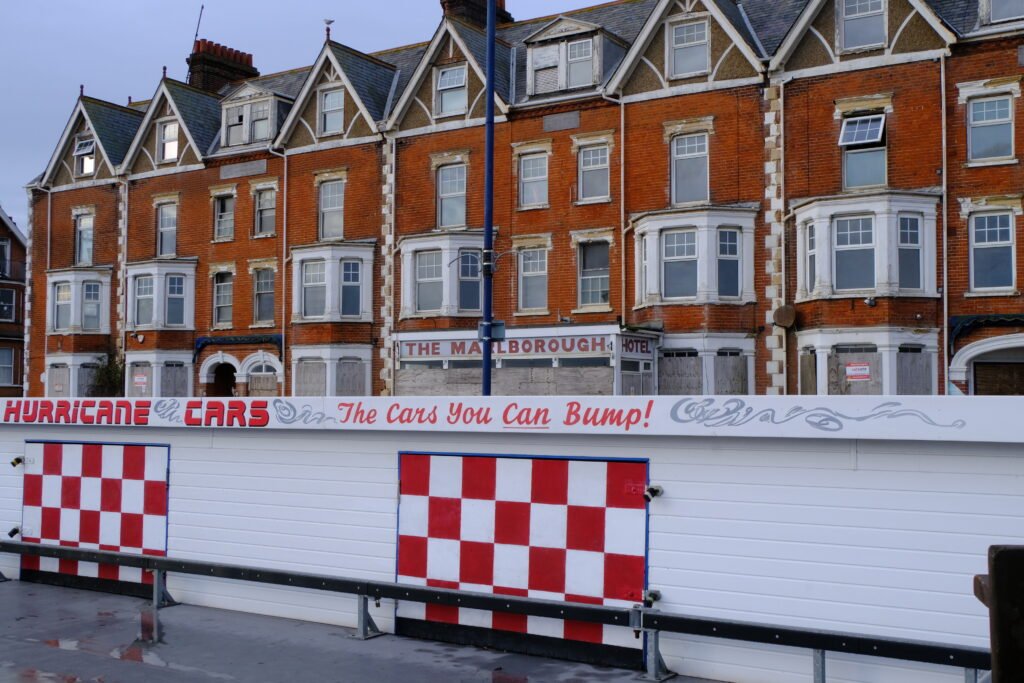
This pattern is familiar. Research into British seaside resorts shows that they structurally suffer from higher poverty, poorer health and fewer opportunities for young people than the national average. Seasonal work, an ageing population and a relatively weak local economy make these towns vulnerable. Felixstowe is no exception, despite — or perhaps because of — its proximity to the port. “The port does not provide enough income for everyone, but fortunately we have residents who help each other through thick and thin,” concludes journalist Smout.
Mayor Corrine Franklin also takes a sober view of this relationship. The port is literally on the edge of the city, but physically isolated and distant for many residents. “We don’t have direct access to the port,” she says. “But it does support families and other jobs. It’s a whole ecosystem.” At the same time, she sees how this growth is putting pressure on daily life in Felixstowe. New homes, more residents, but facilities that are lagging behind. “People are concerned,” Franklin says.
“What will happen if the town continues to grow, when it’s already difficult to get an appointment with the GP or dentist?” – Mayor Corrine Franklin
Where growth stops
While administrators look ahead to growth and amenities, others in Felixstowe live from week to week. For them, it is not about future pressure on GPs or schools, but about what is in the kitchen cupboard today. The figures underline that contrast. In East England, the number of food parcels issued by Trussel Trust, one of the largest food banks operating nationally, has risen by 75 per cent over the past five years. In the East of England region alone, more than 332,000 emergency food parcels were distributed between April 2024 and March 2025. Nationwide, the figure was 2.9 million parcels, a sad record. Felixstowe is no exception.
But these figures only tell the story of the official food banks, which involve forms, referrals and registration. In Felixstowe, there’s also a parallel system, largely invisible in statistics: pop-up food shops. These are low-threshold food distribution points, originally set up by Basic Life Charity and now taken over by several churches and community centres in the city. No proof of eligibility, no intake interviews. Anyone who can pay two pounds can fill a bag themselves.
Two pounds for a full bag
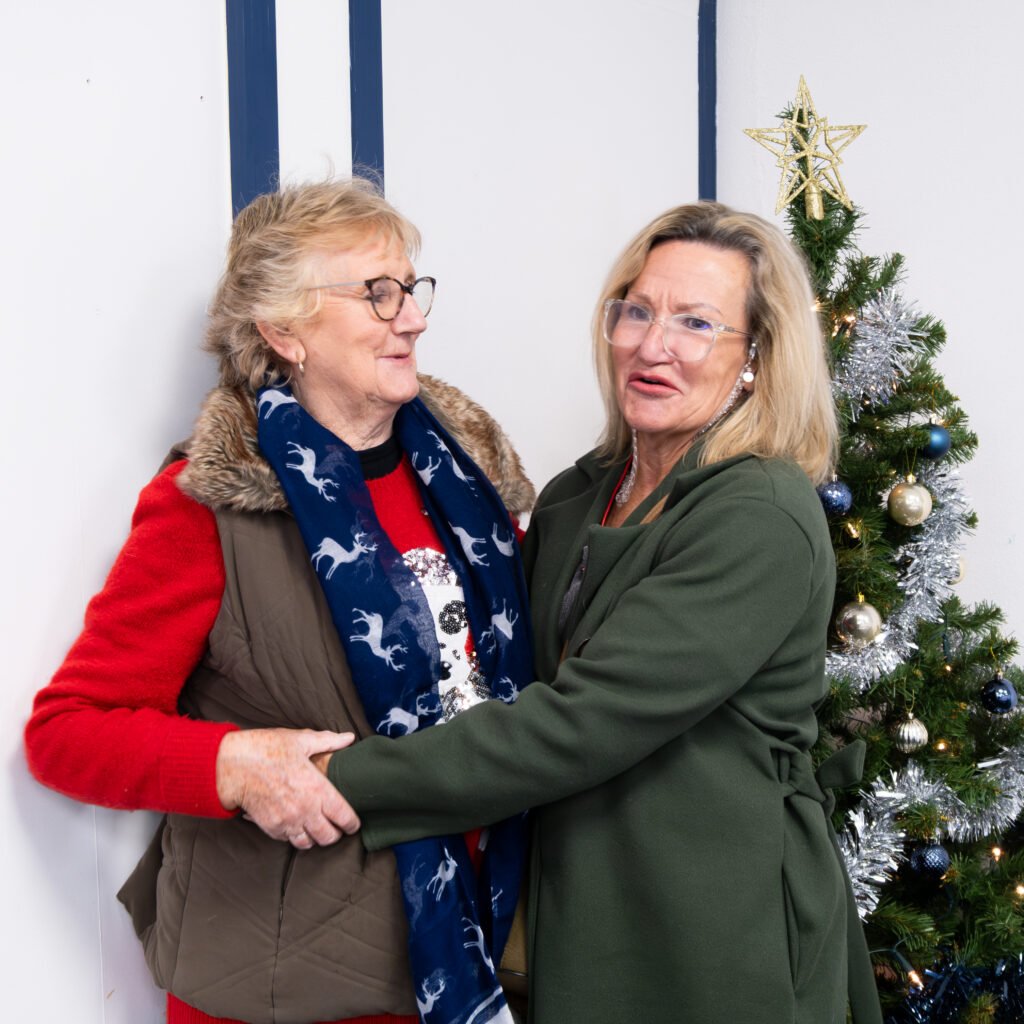
A few streets away from the Basic Life Charity depots stands the River of Life Church, on the border of one of Felixstowe’s most deprived neighbourhoods. The building hardly resembles a church: no stained glass, no tower, but a low, temporary-looking structure more reminiscent of a site hut or container. Inside, it feels warm and light. In the hall, long tables are crammed with food and household items. Ten volunteers move along the rows. Anita Chenery and Sally Verow are wearing cheerful Christmas jumpers. “Just before Christmas, we get extra donations,” says Chenery. “That really makes a difference.”
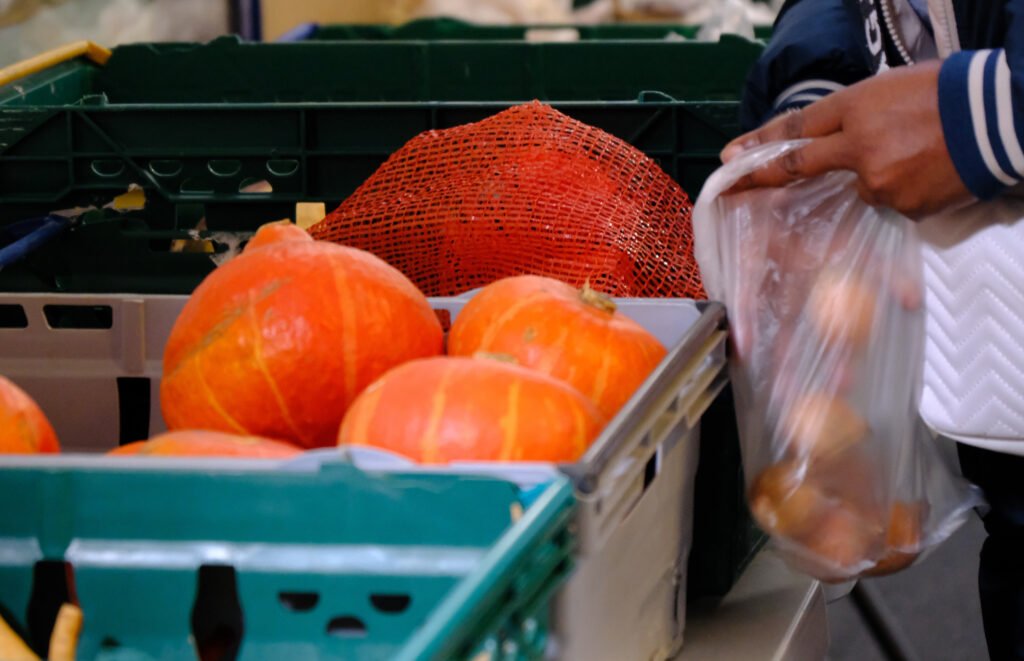
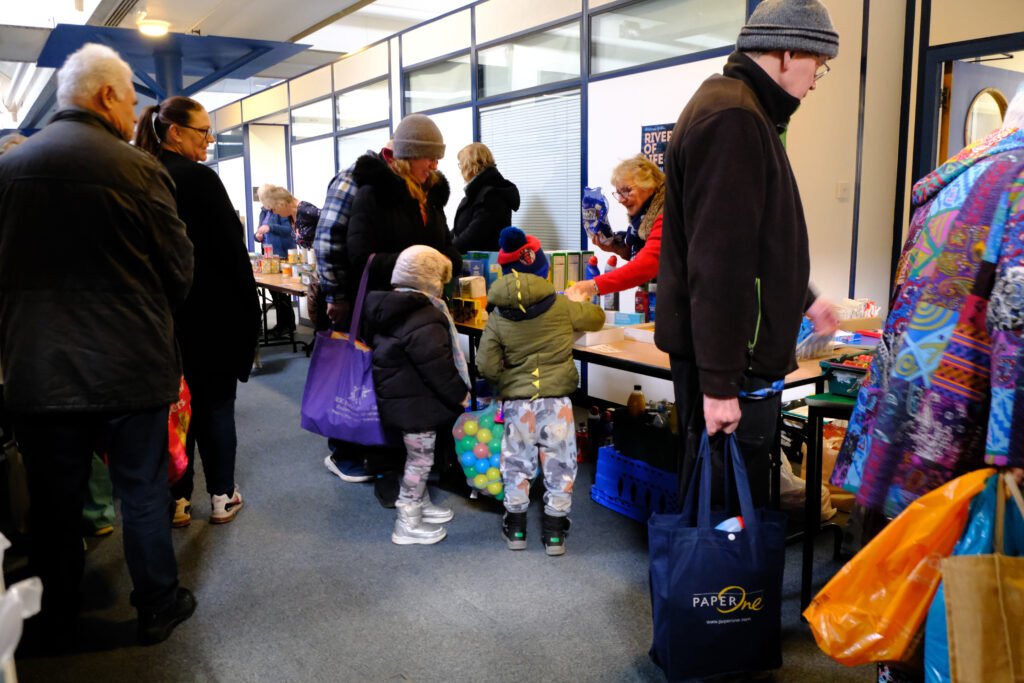
Before visitors are allowed to choose their groceries, they have a cup of tea at small tables in the canteen. Everyone pays two pounds for a full bag. “It’s mainly pensioners, families with young children and people with disabilities who come here,” says volunteer Verown as the visitors walk past the tables to collect food. “These groups struggle the most.” The parsnips disappear quickly from the containers, as do the potatoes. At a table on the left, two young children rummage through Christmas decorations and plastic ornaments.
Bag by bag, table by table
When the first group of visitors has left the hall, Colette Downey enters. She greets one of the volunteers with a hug. As they chat, she fills her bag: a tin of beans, a bag of potatoes, shower gel, a Christmas cracker. “I moved to Felixstowe in 2016, fled really,” she says. “I was coming out of an abusive relationship and had nothing when I arrived here, except my two daughters.” They were still young then; now they are sixteen and eighteen. “The charity shops helped us with furniture. It was December. We celebrated Christmas at the Salvation Army and immediately felt welcome.”
Shortly afterwards, Downey joined the River of Life Church. They celebrated Christmas here last year too. “Things are better now,” she says, closing her bag. “But the financial pressure remains. Without this help, it would be much more difficult.” She walks towards the canteen with her shopping. In an hour, a hot Christmas lunch will be served there. The room is full, the smell from the kitchen is overwhelming. The kettle is rolling. Here in Felixstowe, within walking distance of one of Europe’s largest ports, the community is keeping itself going — bag by bag, table by table.
